Top 10 Differences of SEO & Google Ads
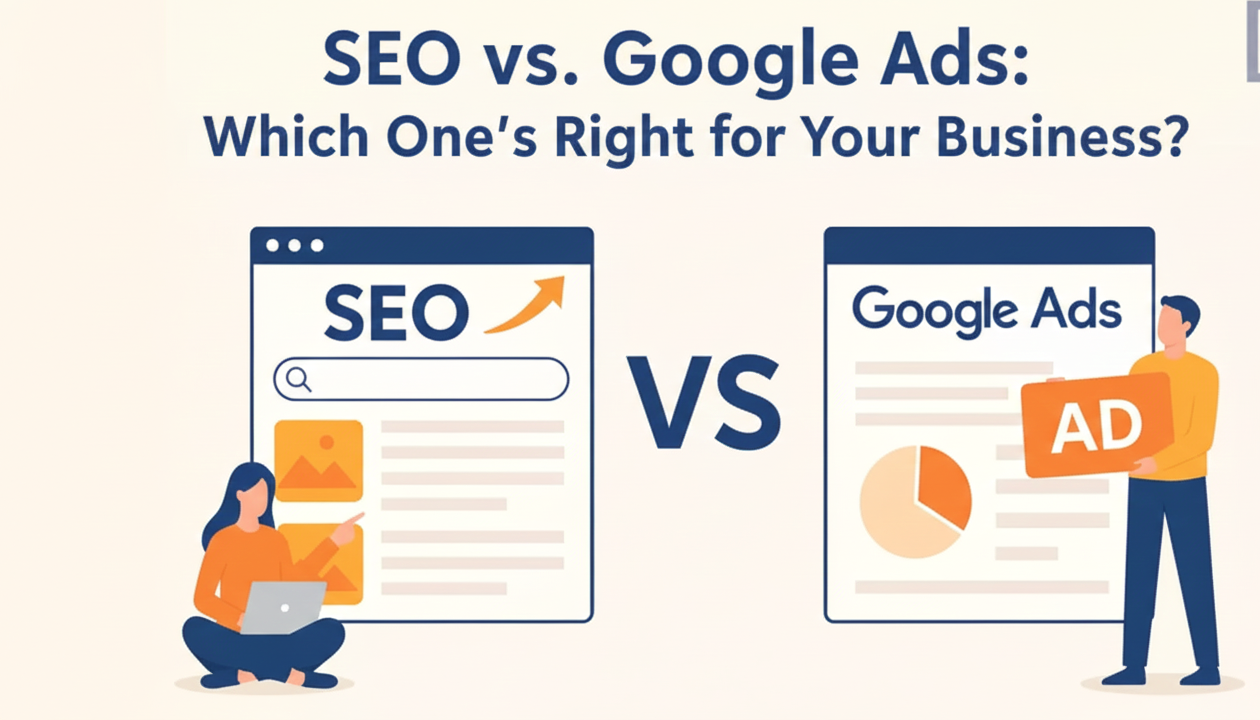
Understanding the Top 10 Differences of SEO & Google Ads is essential for every business that wants to build a balanced, high-performing digital marketing strategy. The Top 10 Differences of SEO & Google Ads highlight how both channels work, how they drive visibility, and how each contributes to long-term or short-term growth. With search competition increasing every year, brands that clearly understand the Top 10 Differences of SEO & Google Ads can choose the right mix of organic authority and paid acceleration to dominate their market.
While SEO focuses on earning visibility through optimized content and website quality, Google Ads allows you to buy visibility instantly through targeted advertising. Both are powerful, but they serve different intentions, budgets, and timelines. Here is a completely fresh breakdown of the key differences marketers must understand.
⭐ 1. Organic Traffic vs. Paid Traffic
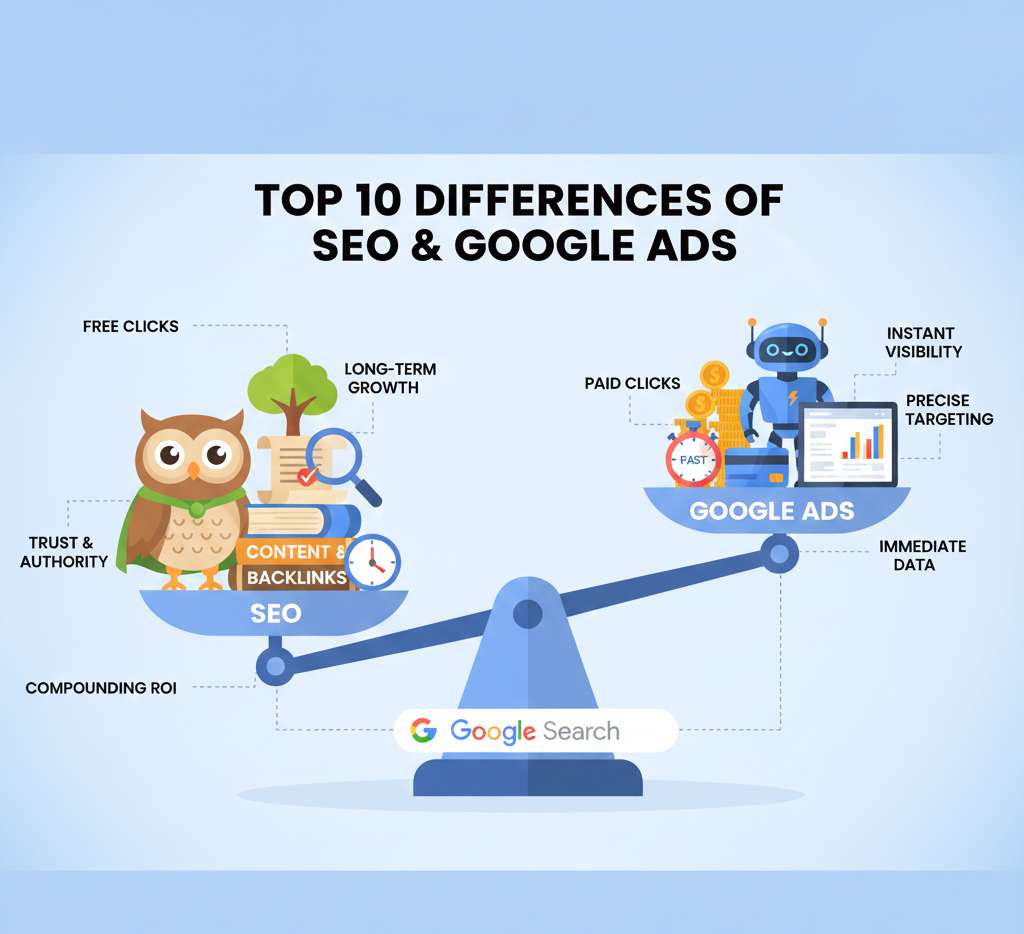
SEO helps you attract organic traffic through keywords, content, backlinks, and website optimization. Google Ads generates paid traffic — you appear instantly, but every click costs money. One builds equity; the other buys attention.
⭐ 2. Timeframe of Results
SEO takes time, often months, because rankings depend on competition, authority, and consistent optimization. Google Ads delivers traffic the same day your campaign is launched. SEO grows slowly but lasts long; Google Ads works fast but stops fast.
⭐ 3. SERP Placement
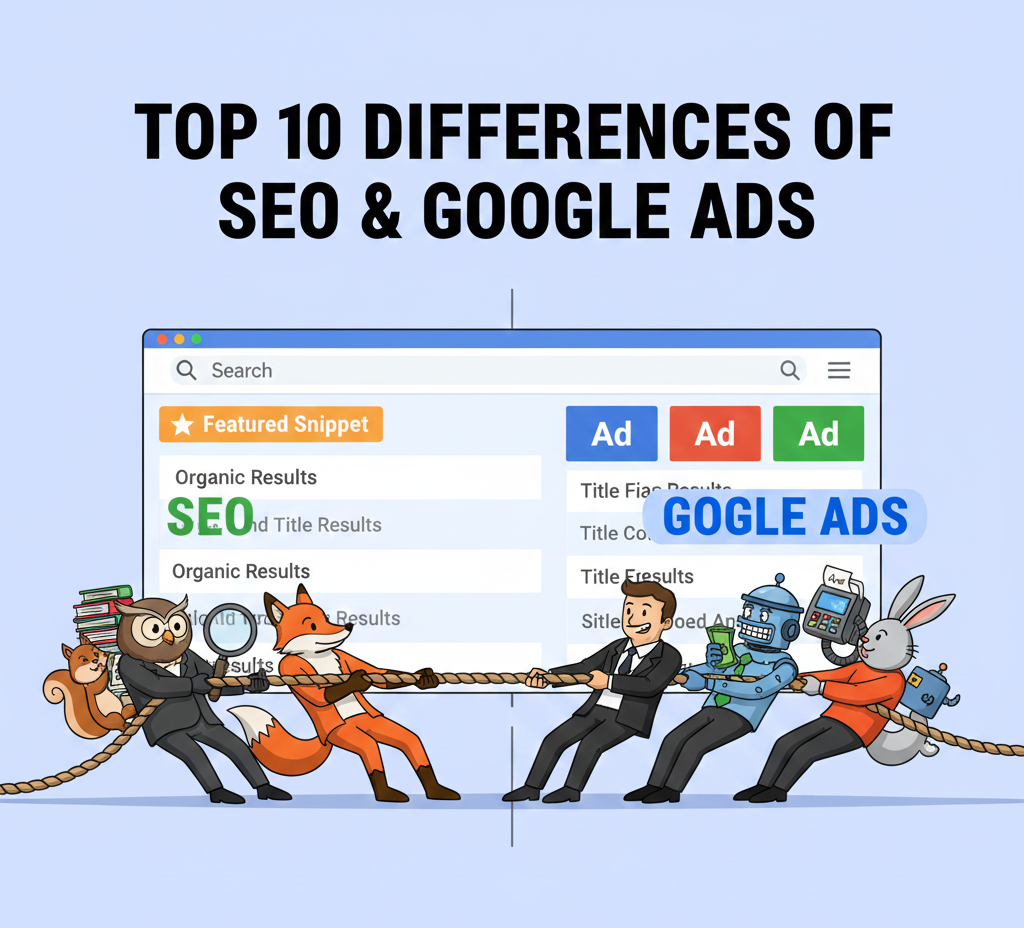
SEO ranks your pages in the natural search results. These listings appear below paid ads and are perceived as more trustworthy. Google Ads, however, places your business at the very top of the page — above organic listings — marked as “Sponsored.” You pay for premium shelf space.
⭐ 4. User Trust & Click-Through Rate–Top 10 Differences of SEO & Google Ad
SEO earns more trust because users believe organic rankings are more authentic. Organic listings often receive higher CTR over time. Google Ads can secure visibility, but some users purposely skip ads, meaning CTR relies heavily on strong targeting and compelling ad copy.
⭐ 5. Control Over Visibility
You cannot directly control SEO rankings — they depend on Google’s algorithms and content quality. With Google Ads, you have full control: you can adjust your budget, your keywords, your bids, and your ad creatives anytime, and immediately influence where and how your brand appears.
⭐ 6. Sustainability
SEO creates long-lasting results. Once you rank well, your content can bring traffic for years with minimal upkeep. Google Ads works like renting space — once the budget ends, your visibility disappears instantly.
⭐ 7. Targeting Precision
SEO targets search intent, meaning users find you when your content answers their query. Google Ads allows refined targeting such as device type, demographics, audience behavior, location radius, interests, and remarketing. It’s perfect for highly specific lead generation.
⭐ 8. Keyword Focus
SEO usually targets a mix of informational, commercial, and long-tail keywords to build an overall content ecosystem. Google Ads focuses more on high-intent, transactional keywords that convert quickly.
⭐ 9. Data & Analytics
SEO provides valuable insights but not always precise keyword-level data due to Google’s “not provided” limitations. Google Ads offers clear data for every keyword, click, impression, and conversion. It’s one of the best tools for testing which keywords drive results before investing in SEO content around them.
⭐ 10. Conversion Patterns
SEO brings well-researched visitors who tend to trust organic pages and convert over the long term. Google Ads often captures users ready to buy immediately — especially when targeting strong commercial intent keywords like “best,” “near me,” or “price.”
The Top 10 Differences of SEO & Google Ads reveal that neither channel is “better.” Instead, they serve different roles:
✔ SEO builds long-term brand authority, credibility, and sustainable traffic.
✔ Google Ads delivers immediate reach, measurable results, and laser-focused targeting.
When used together, they create a powerful synergy — SEO builds lasting visibility, while Google Ads provides the speed and precision needed for competitive markets, product launches, and fast lead generation.
Brands that strategically combine both grow faster, spend smarter, and achieve stronger search dominance.